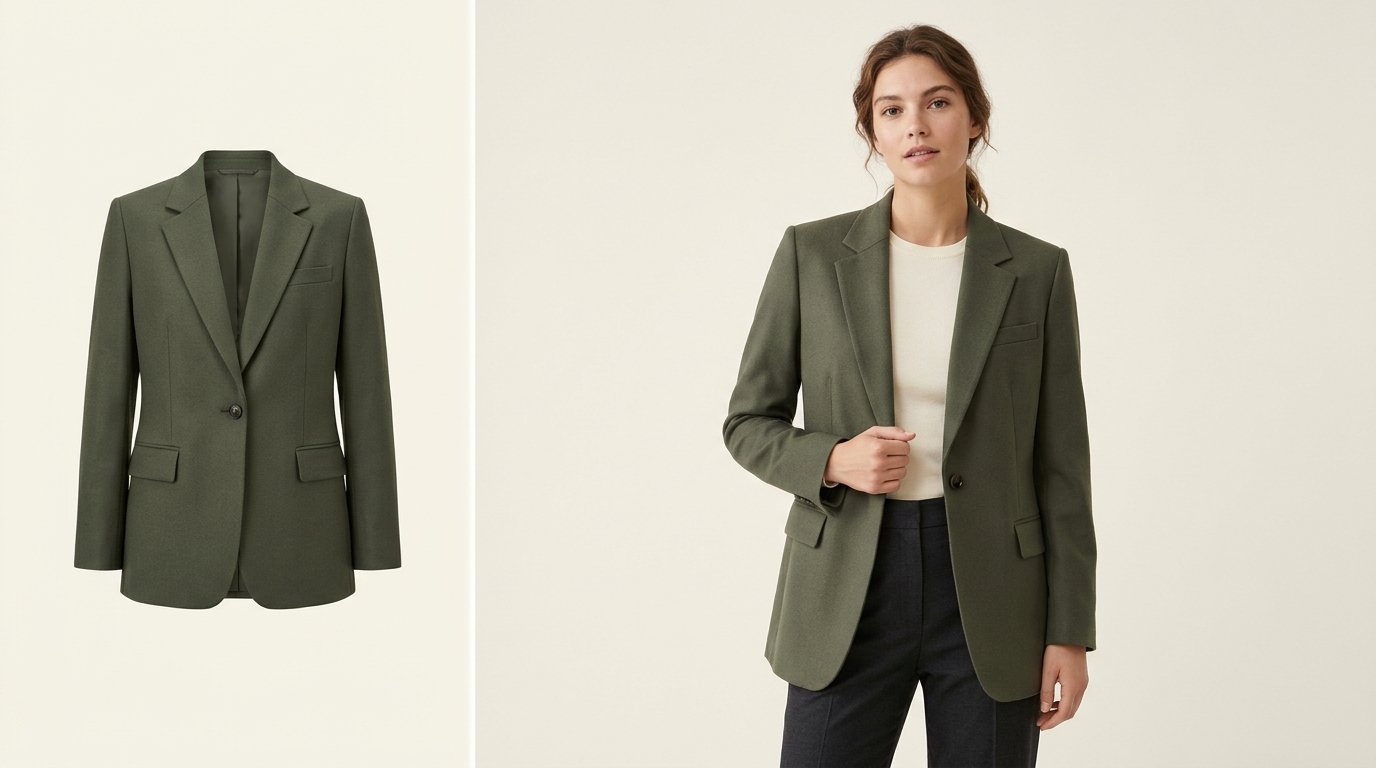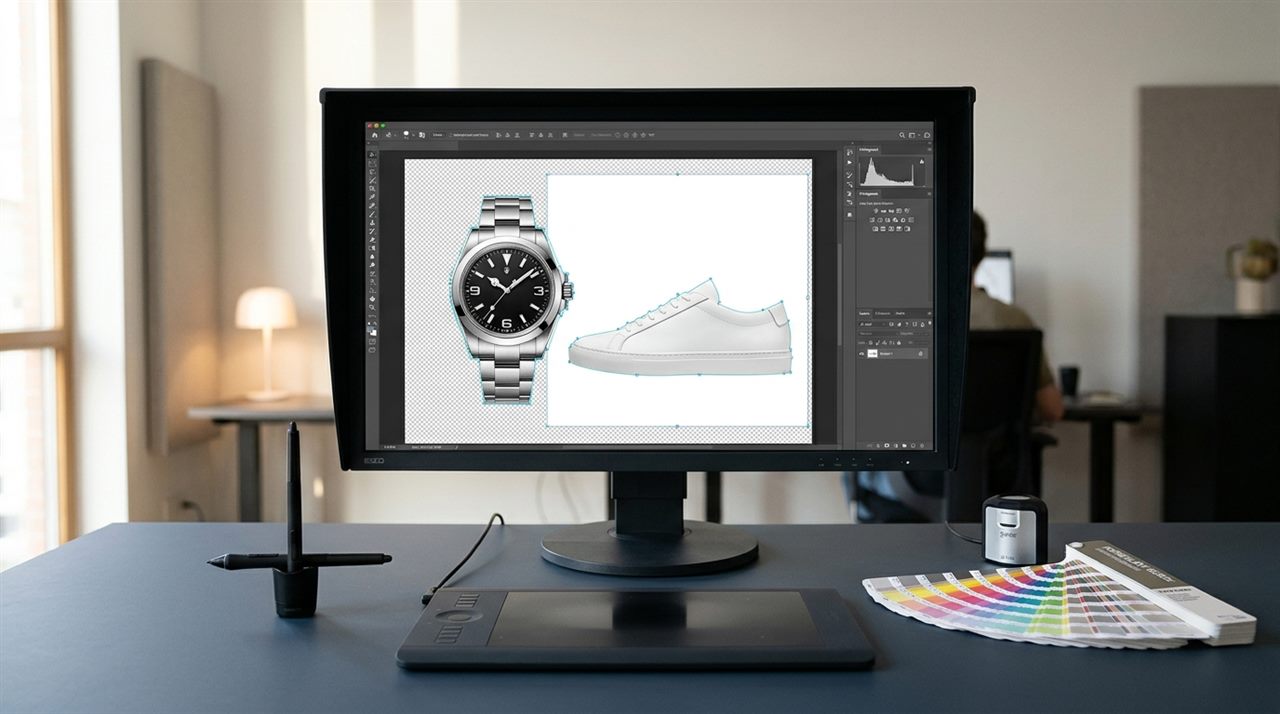
High-velocity apparel, footwear, and consumer-goods brands no longer treat image post-production as an isolated desktop folder handed around over email. In 2026, engineering teams at top retail brands wire studio photography, automated visual pipelines, and senior human retouching directly into their ERP, PIM, DAM, and storefront stacks using REST APIs, reusable brand export presets, HMAC-signed webhooks, and threshold-based Human-in-the-Loop QA.
When product teams rely purely on manual portal uploads, scaling from 200 to 5,000 SKUs per season creates immediate operational drag: inconsistent square margins across Shopify collection rows, bouncing footwear baselines, forgotten sRGB profile conversions, and unverified transparent edges on lace or acrylic. Yet running raw fully automated cutouts with zero human fallback introduces unacceptable brand risk on hero campaigns. This CTO blueprint breaks down the production architecture behind modern headless visual workflows—including stateless /v1 REST API design, zero-credit CI/CD sandboxes, baseline-locked Brand Presets, Auto-QA escalation thresholds, cryptographic webhook verification, and direct Shopify, BigCommerce, Magento 2, and Creative Force synchronization.
1. Why Headless Visual Pipelines Replace Manual Studio Queues in 2026
In legacy post-production workflows, a studio coordinator downloads raw camera captures, renames SKU folders locally, uploads ZIP archives into a vendor web form, downloads finished files 24 hours later, runs manual Photoshop actions for channel resizing, and re-uploads assets to Shopify or an enterprise PIM. That manual shuttle breaks down fast once brands run multi-region storefronts or frequent seasonal drops:
- Visual Layout Shift Across Collection Grids: Without deterministic canvas alignment rules locked inside a server-side preset, shoes float at varying vertical heights while coats shrink or clip inconsistently from one batch to the next.
- Lost Metadata & Naming Drift: Human file re-uploads often drop SKU identifiers, colorway tags, or
IPTC Digital Source Typetags required by Google Merchant Center image policies. - Binary "All-AI vs. All-Manual" Pricing Traps: Teams either overpay $3.50–$6.00 per image for simple white-background cuts on easy apparel, or push unverified automated cutouts straight onto luxury hero PDPs where translucent lace, hair, or glass fails QA.
Modern visual operations solve all three problems by splitting image engineering into machine-orchestrated API routing plus selective human expert escalation. Instead of logging in to drag files around, your backend fires an authenticated request to our Developer API Hub—or receives automated jobs straight from Creative Force—and receives signed webhook callbacks when assets pass QA.
End-to-End Automated Image Pipeline & Auto-QA Routing
X-Sandbox: true
2. Production Economics: Worked 1,000-SKU Batch Comparison
To benchmark automated API + selective human escalation honestly, compare two workflows processing 1,000 product SKUs (such as 920 apparel/footwear catalog angles requiring clean white or transparent cutouts and consistent margins, plus 80 complex reflective jewelry, patterned knit, or intricate lace hero SKUs requiring senior Photoshop craft):
3. Designing a Stateless Production REST API (OpenAPI 3.1 & Sandbox Mode)
Enterprise engineering leaders expect clean isolation between marketing content, interactive client UI, developer documentation, and machine API traffic. Just as top visual automation platforms separate documentation hubs from high-throughput API hosts, Dinamico runs machine-to-machine traffic strictly on https://api.dinamicostudio.com/v1 while publishing the live OpenAPI 3.1.0 specification and LLM-readable docs on docs.dinamicostudio.com (via /openapi.json and /llms.txt).
Key engineering primitives every headless image API integration should enforce from day one:
- Scoped Bearer Authentication (RFC 6750): Authenticate using RFC 6750
Authorization: Bearer <token>orX-Api-Keyheaders with granular permissions (orders:read,orders:write) so a storefront webhook listener never holds billing write access. - Zero-Credit Sandbox Mode for CI/CD: Pass
X-Sandbox: true(or JSON field"sandbox": true) in staging pipelines and pull-request checks. The API validates request schemas, preset UUIDs, and callback logic without touching production credits or triggering GPU billing. - Dual Path for AI Velocity & Heavy Raw Masters: Route instant cutouts, 3D ghost mannequin, editorial flat-lays, and virtual try-on through synchronous/async endpoints (
POST /v1/remove-bg,POST /v1/ghost-mannequin,POST /v1/flat-lay,POST /v1/virtual-try-on), while routing up to 2 GB RAW/PSD/TIFF stacks to human studio specialists via encrypted presigned upload URLs (POST /v1/human-orders/presign+POST /v1/human-orders).
4. Brand Export Presets: Locking Canvas Geometry & bottom_center Alignment
The fastest way to break a fashion or footwear collection grid is letting each retoucher or pipeline step guess canvas padding, aspect ratio, or product vertical placement. A shopper scrolling a 4-column collection page immediately spots mismatched sneaker horizons or cropped jacket collars.

Instead of repeating crop dimensions inside every integration script, store your channel templates once inside Brand Export Presets (inspectable programmatically via GET https://api.dinamicostudio.com/v1/presets) and pass "preset_uuid": "..." on every render call:
| Preset Parameter | Shopify Footwear / Bags | Amazon US Main Hero | Editorial Social / Lookbook |
|---|---|---|---|
| Canvas Dimensions | 2048 × 2560 px (4:5) |
2000 × 2000 px (1:1) |
1600 × 2000 px (4:5) |
| Vertical Alignment | bottom_center (locked baseline) |
center (≥85% frame fill) |
bottom_center / rule-of-thirds |
| Background / Shadow | #FFFFFF or #F7F5EE + Natural Shadow |
Strict #FFFFFF per Amazon specs |
Travertine, Linen, or Transparent PNG |
| Margin & Profile | 8% padding · 8-bit sRGB |
6% max margin · 8-bit sRGB |
10% breathing room · Progressive JPG |
5. Auto-QA Quality Thresholds & 1-Click Human Escalation
Pure automation shines on 85%–92% of solid cotton apparel, packaged consumer goods, and clean sneakers. Where fully automated pipelines fall short is edge-case ambiguity: bridal lace, sheer chiffon sleeves, reflective watch bezels, multi-chain necklaces, and color-critical luxury outerwear targeting Delta E < 2.0 (CIEDE2000 studio calibration against a physical swatch).

When you send "auto_escalate_to_human": true in your API request, the pipeline scores every completed asset before delivery (also exposed via the X-QA-Score response header). If the frame triggers a manual-review flag—for example, complex translucent edges or low foreground confidence—Dinamico automatically creates a senior retoucher escalation ticket under your saved Studio Style Guide (clipping path geometry, natural/reflection shadow, color-way pins, and target DPI), refunds the automated credit back to your workspace ledger, and notifies your webhook once a human specialist finishes the master deliverable.
6. Native Storefront & Studio Connectors + Cryptographic Webhook Verification
Writing glue scripts from scratch is optional when your storefront or DAM already supports native connector events. Our Enterprise API & Connectors layer natively connects with:
- Creative Force (
ExtPost+ Job Sync): Ingest studio capture webhooks automatically, map Style Guide instructions to job deliverables, and push finished assets directly back via the studio completion contract. - Shopify Storefronts: Push approved batch renders straight into Shopify product media galleries via Shopify GraphQL productCreateMedia workflows without manual downloads.
- BigCommerce v3 & Magento 2 REST: Sync finished multi-channel catalog imagery cleanly to product media endpoints with preserved SKU naming conventions.
Whenever you consume asynchronous API webhooks (or revision updates from human retouchers), always verify the HMAC-SHA256 signature header using timing-safe string comparison before updating live storefront media:
$rawBody   = $request->getContent();
$signature = (string) $request->header('X-Dinamico-Signature');
$expected  = hash_hmac('sha256', $rawBody, config('services.dinamico.webhook_secret'));

if (! hash_equals($expected, $signature)) {
    abort(401, 'Invalid Dinamico webhook signature.');
}

$event = $request->json('event');       // e.g. "job.completed" | "human_order.delivered"
$sku   = $request->json('data.sku');    // preserved original filename / SKU reference
7. The 7-Point CTO Pre-Launch Checklist for Automated Visual Pipelines
Before Going Live on Your Seasonal Catalog Pipeline
- Least-Privilege Scoped API Keys: Issue separate tokens per service (e.g., read/write key for PIM ingest vs. read-only key for QA reporting) with clean revocation in one click.
- Validate in Zero-Credit Sandbox First: Run full CI payload tests against
https://api.dinamicostudio.com/v1withX-Sandbox: truebefore toggling production credits. - Pin Brand Export Presets by UUID: Never hardcode pixel padding across 5 repositories—lock
1:1,4:5,bottom_center, andsRGBinside named workspace presets. - Enable
auto_escalate_to_humanfor Hero SKUs: Protect luxury accessories, lace apparel, hair masking, and color-critical garments with automatic senior artist fallback. - Enforce HMAC-SHA256 & Idempotent Job Handling: Verify callback signatures with
hash_equalsand deduplicate webhooks using unique job/order UUIDs so retries never duplicate Shopify media. - Route Heavy Multi-Layer Masters via 2 GB Presign: Keep RAW, layered PSD, and focus-stacked jewelry plates out of base64 JSON payloads—stream straight to encrypted 2 GB transfer URLs.
- Verify Channel & Metadata Rules Before Indexing: Confirm Amazon pure-white main specs and Google Shopping post-compression
IPTC Digital Source Typemetadata where generative backgrounds apply.
8. Frequently Asked Questions on Automated Image Pipelines & Hybrid QA
How do we test the Dinamico REST API v1 in CI/CD without spending production credits?
Include the header X-Sandbox: true (or JSON field "sandbox": true) on requests to https://api.dinamicostudio.com/v1. Sandbox calls validate authentication, OpenAPI payload structure, Brand Export Preset UUIDs, and callback flows with zero credit deduction within your daily sandbox quota.
What happens when automated Auto-QA flags a translucent lace garment or reflective watch?
When auto_escalate_to_human is enabled and the asset scores below the confidence threshold (exposed on the X-QA-Score header), the pipeline automatically refunds the automated credit and opens a human retouching ticket under your saved Studio Style Guide so a senior Photoshop artist finishes the file cleanly.
How do Brand Export Presets prevent bouncing product alignment across Shopify collection pages?
Reusable presets lock exact output width, height, file format, outer margin percentage, and vertical alignment—including deterministic bottom_center baseline alignment for footwear and handbags—so every SKU lands on the exact same horizon line without manual cropping scripts.
Can our studio send 500 MB to 2 GB RAW, TIFF, or layered PSD masters through the API?
Yes. Rather than stuffing multi-hundred-megabyte binaries into synchronous JSON requests, call POST /v1/human-orders/presign to request a 256-bit encrypted upload URL supporting up to 2 GB per file, stream your master stacks directly, and reference those keys in POST /v1/human-orders.
Which DAM, studio workflow, and storefront platforms connect out of the box?
Dinamico supports native connectors for Creative Force (ExtPost ingestion webhook + job synchronization), Shopify catalog media push, BigCommerce v3, and Magento 2 REST, alongside our open REST API v1 and OpenAPI 3.1 schema for custom PIM/ERP builds.
How are asynchronous API and human revision webhooks secured?
Every webhook event includes an HMAC-SHA256 signature computed over the raw request body using your workspace webhook secret, allowing your backend to validate authenticity with timing-safe hash_equals() checks and block spoofed callbacks or SSRF targets.
Ship Your Automated Visual Pipeline in One Sprint
Explore interactive endpoints on docs.dinamicostudio.com, download our OpenAPI 3.1 contract, test zero-credit sandbox calls, and connect Creative Force, Shopify, BigCommerce, or Magento 2—backed by 256-bit encrypted cloud transfers and strict NDA protection.