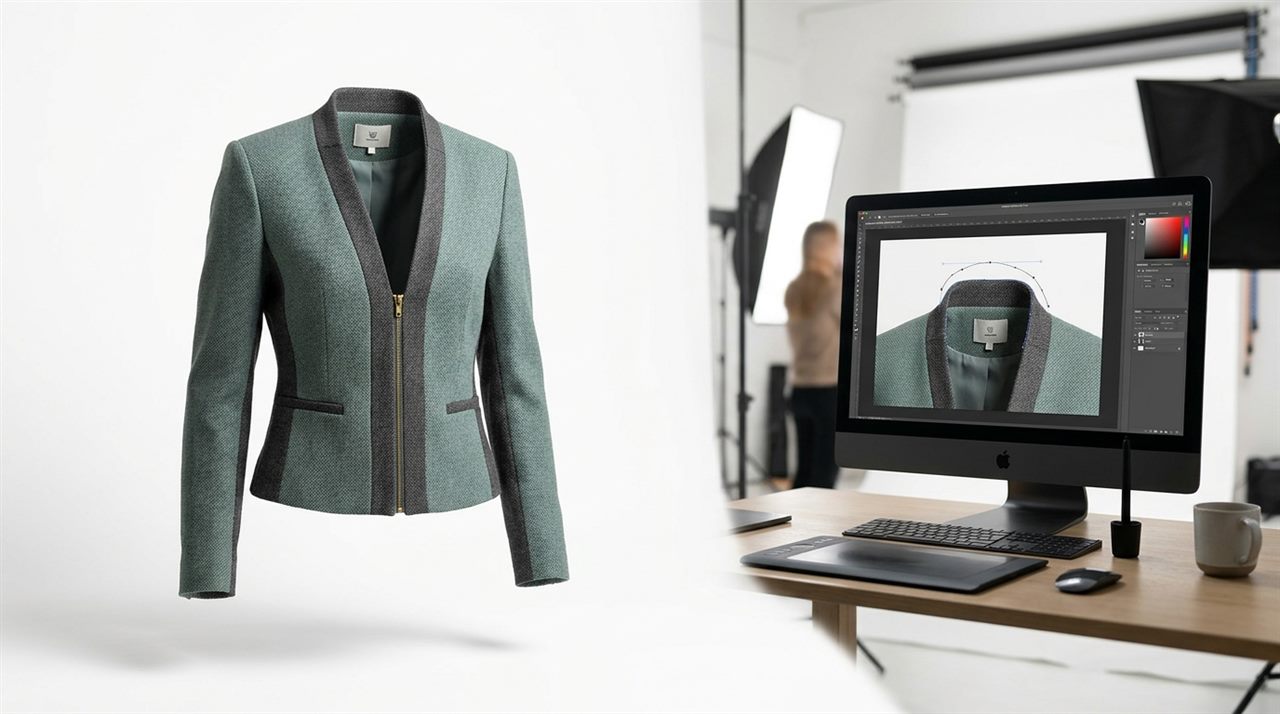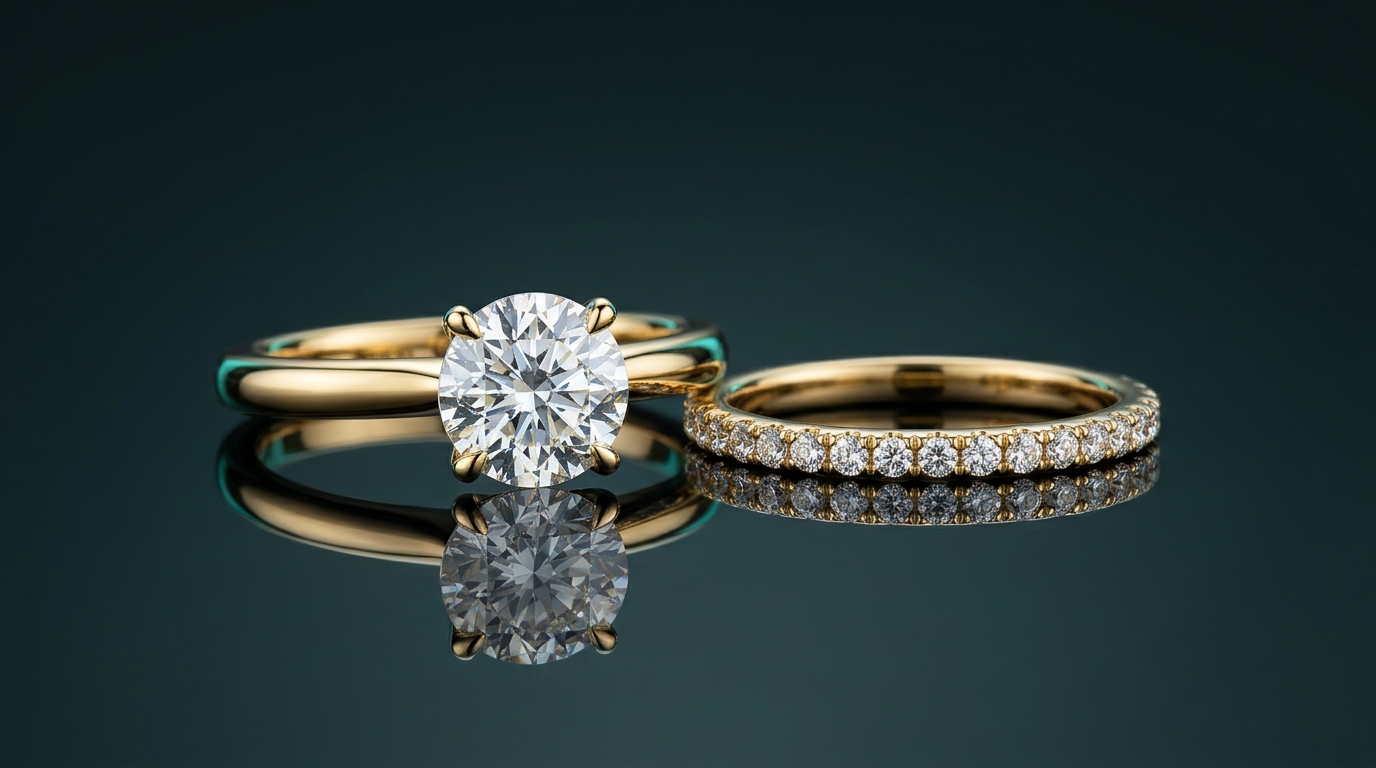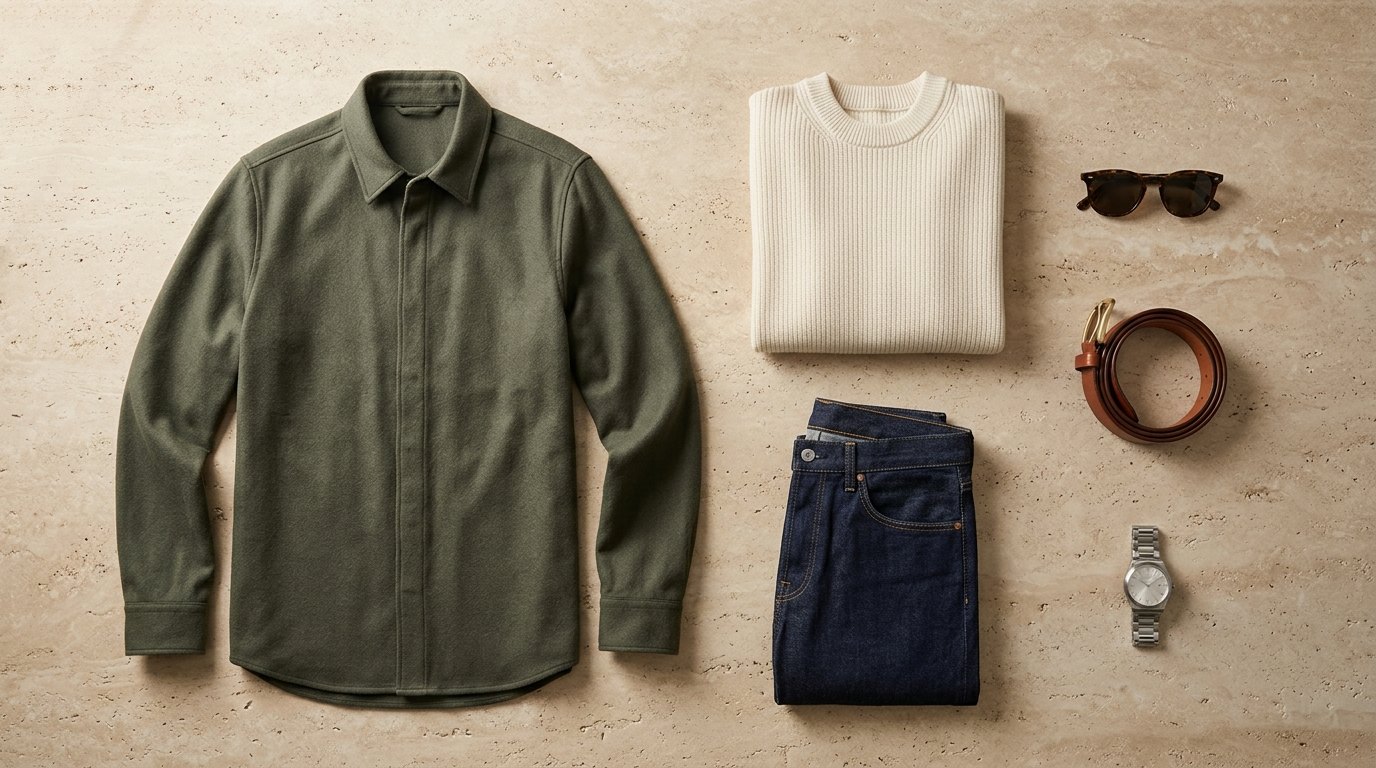
Walk through leading Shopify Plus storefronts, luxury email lookbooks, and paid social funnels in 2026 and you will notice a consistent visual backbone behind many apparel and lifestyle drops: overhead 90-degree flat-lay product photography. While on-model imagery demonstrates fit and 3D ghost mannequin composites showcase structural tailoring, flat-lay photography excels at instant garment readability, outfit pairing, texture intimacy, and clean editorial aesthetics across mobile feeds.
Historically, producing clean commercial flat-lays at scale was slow and expensive. Every SKU required industrial steaming, millimeter-accurate pinning on foam board, heavy overhead C-stand boom rigging, stone or linen backdrop swaps, directional softbox feathering, and manual wrinkle cleanup—averaging $42 to $95 per finished asset when shooting 50+ seasonal styles. In 2026, pairing disciplined physical prep with AI Editorial Flat-Lay generation and 1-click senior human QA lets creative teams transform existing hanger, ghost mannequin, or basic tabletop captures into cohesive travertine, natural linen, light oak, or pure studio white flat-lays in minutes. This commercial studio manual details an illustrative 2026 production P&L, styling archetypes, surface engineering, overhead lighting rig specs, crease-free folding SOPs, and the 8-point commercial QA checklist required for luxury retail and Google Shopping publishing.
1. Why Flat-Lay Photography Remains an E-Commerce Powerhouse in 2026 (Real P&L Math)
Many merchandising leaders assume that once they invest in on-model Virtual Try-On or mannequin photography, overhead flat-lays become optional. In practice, on small smartphone screens—where most fashion and lifestyle browsing happens—a well-composed overhead flat-lay delivers three merchandising advantages that vertical full-body shots cannot replicate alone:
- Instant Textile & Craft Legibility: In a
1:1or4:5mobile feed card, an overhead flat-lay fills 75% to 85% of the frame with collar construction, knit gauge, button hardware, and fabric grain—communicating material detail before a shopper even taps the product. - Outfit Pairing Clarity: Styling a jacket alongside folded denim, sunglasses, and leather accessories communicates complete-the-look merchandising in a single glance across Shopify collection pages and Klaviyo campaigns.
- Zero Model Distraction on Colorway Grids: When displaying 6 to 12 seasonal color variants side by side on a collection grid, synchronized overhead flat-lays keep every collar height, sleeve angle, and backdrop luminance aligned so shoppers compare color and silhouette cleanly.
The bottleneck has always been physical tabletop production economics. Styling a single knit sweater or tailored blazer symmetrically on a floor or studio table takes a skilled wardrobe stylist 12 to 20 minutes per SKU before a single shutter clicks. Multiply that across a 50-SKU seasonal drop and add stone slabs, linen backdrops, lighting assistants, and manual crease cleanup, and the traditional tabletop ledger can reach $3,450 per drop ($69.00/asset). By comparison, the worked hybrid example below—$22.50 for 50 AI renders ($0.45 each) plus $28.00 for human retouching on 8 hero graphic SKUs ($3.50 each)—totals $50.50, or $1.01 per image averaged across all 50 (assuming usable source garment photos already exist and excluding initial source-photo capture costs):
2. How Editorial Flat-Lays Compare Across 2026 Retail Channels
Not every e-commerce channel follows the same flat-lay rules. Image requirements vary by marketplace and product category. For example, under official Amazon US main-image requirements, adult-size clothing generally requires an on-model main image, whereas clothing accessories and multipacks are shown flat—so a pure white-background flat lay can suit a T-shirt multipack, while a single adult T-shirt generally needs an on-model main image. By contrast, brand-owned touchpoints—Shopify lookbooks, Klaviyo emails, and Meta/Instagram carousel ads—allow tactile editorial surfaces freely.
The chart below summarizes studio-reported observations (unpublished methodology) comparing editorial surface flat-lays against plain white cutouts across five separate channel engagement and browsing metrics. Because each bar tracks a different outcome—click-through rate, email click rate, product-page visits, time on product page, and add-to-cart activity—each figure applies only to its own metric and should not be read as a verified sales or conversion gain:
Editorial Flat-Lay Engagement & Activity Metrics vs. Plain White Cutouts
3. The 3 Commercial Flat-Lay Styling Archetypes (And When to Use Each)
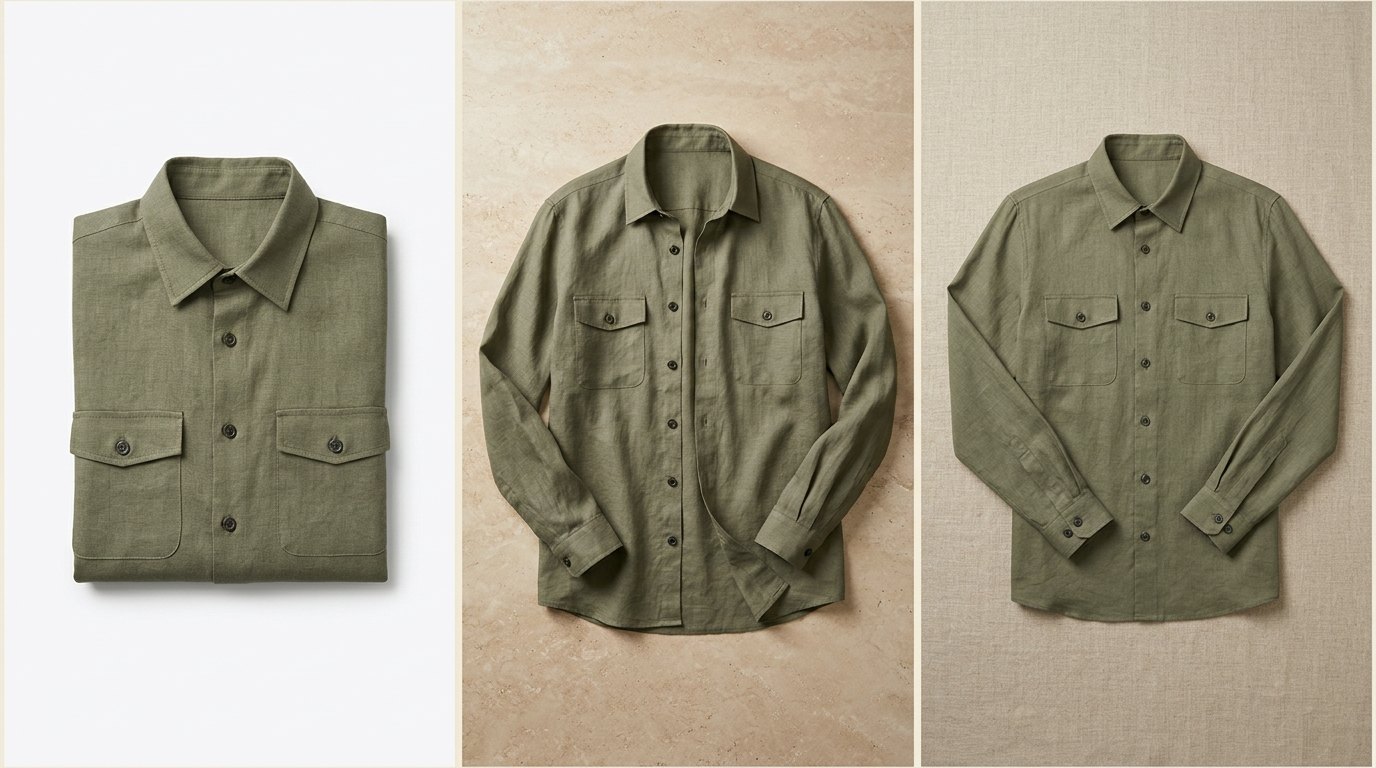
Amateur flat-lay catalogs fail because every garment is thrown onto a tabletop with inconsistent fold geometry—one shirt looks stiffly ironed like a dry-cleaning bag while the next hoodie sits bunched and crooked. Professional e-commerce art directors standardize every collection around three distinct commercial styling archetypes, choosing one locked style per category so collection pages read like an intentional architectural grid:
| Styling Archetype | Visual Signature | Best Product Categories | Ideal Channels |
|---|---|---|---|
| 1. Relaxed Editorial Drape | Full garment spread with subtle, deliberate organic fabric movement—one softly angled sleeve, gentle waist taper, tactile micro-folds that reveal fabric weight. | Overshirts, cashmere knits, linen shirts, resortwear, loungewear, silk blouses | Shopify Hero Grids, Instagram/Meta Ads, Klaviyo Editorial Launches |
| 2. Crisp Retail Fold | Boutique-table precision fold (rectangular 3:4 or 4:5 stack) displaying collar, woven neck label, chest embroidery, and crisp folded sleeve cuff. |
Crewneck tee multipacks, polos, heavy hoodies, merino sweaters, folded denim, bundles | Multipack Listings, Colorway Swatch Selectors, Wholesale Line Sheets |
| 3. Minimalist Flat Symmetrical | Zero organic wrinkles, mathematically mirrored left/right sleeve angles, perfectly parallel bottom hem, clinical edge geometry. | Clothing accessories, technical outerwear, activewear, streetwear graphic tees, structured blazers | Eligible Marketplace Secondary & Flat-Lay Galleries, Technical Spec Sheets, Archive Catalogs |
4. Surface & Backdrop Engineering: Choosing the Right Material Without Color Casts
Your flat-lay surface is not decoration—it is an optical reference plane that controls how a shopper's brain judges fabric color, price tier, and material authenticity. Placing a cool ivory linen shirt on a stark blue-tinted white board makes the shirt look yellowed and dingy; placing a matte black leather bag on dark slate swallows edge separation completely.
Inside Dinamico AI Studio's Flat-Lay engine and our physical tabletop sets, we standardize around five color-neutral commercial surfaces engineered to support our studio color-accuracy target of Delta E below 2.0 without introducing ambient color spill. Verifying that target requires comparing output against a physical reference swatch using a named color-difference formula such as CIEDE2000 under defined measurement conditions (standardized illuminant, observer angle, and calibrated instrument):
5. Overhead Camera Rig, 90° Geometry & Softbox Lighting Blueprint
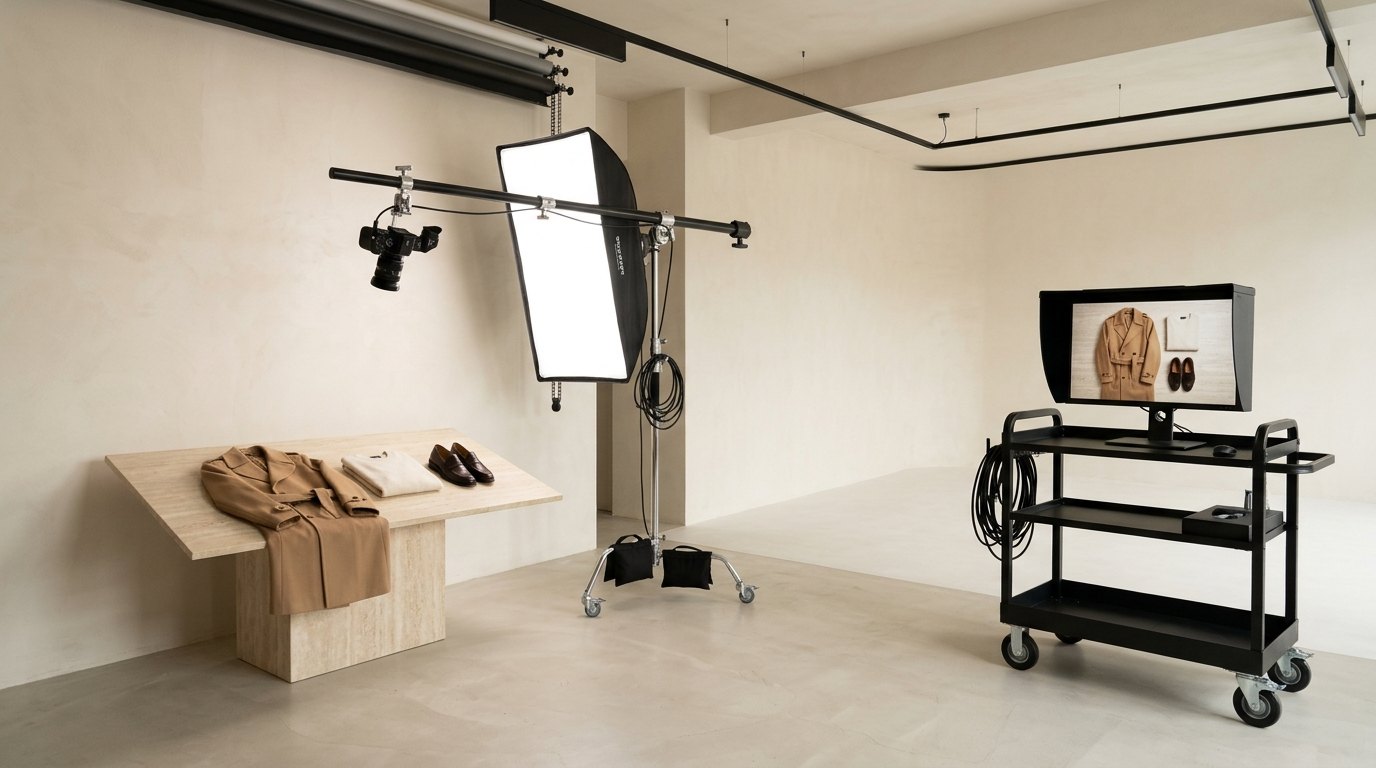
Whether you are capturing final in-camera flat-lays or shooting clean raw source files to feed into an AI Flat-Lay pipeline, optical geometry and shadow direction decide everything. The single deadliest giveaway of an amateur flat-lay is subtle keystone distortion—standing on a step-ladder and tilting a camera at 82 degrees instead of a true bubble-leveled 90 degrees makes shoulders look bloated and bottom hems tapered.
Camera, Lens & Rig Specifications
- Focal Length (
50mmto85mmPrime): Never shoot overhead apparel with a24mmor smartphone ultra-wide lens. Wide-angle optics bend outer sleeves and square borders outward. Mount a50mmor70mmmacro lens on a heavy counterweighted C-stand boom arm (or overhead cross-bar autopole) at160–210 cmabove the table surface. - Dual-Axis Bubble Level & Tethered Grid: Level the table first, then level the camera sensor plane parallel to the table using an electronic dual-axis horizon gauge. Enable a symmetrical
1:1or4:5live-view overlay in Capture One or Lightroom so shoulder tips, cuffs, and hems align to the exact same pixel markers across all 50 SKUs. - Aperture & Sharpness (
f/8–f/11, ISO 100): Flat-lay garments sit at varying vertical heights (padded puffer collars rise6–10 cmabove the table). Stopping down tof/9orf/11keeps both the surface grain and raised collar stitching tack-sharp edge to edge.
Directional Softbox Lighting (How to Reveal Texture Without Harsh Glare)
- Key Light (Single Large Octabox or Stripbox at 45° Side-Top): Position a large diffused softbox (
120 cm+) at a low 35° to 45° grazing angle off to the upper-left of the table. Grazing side-light rakes across knit ribs, brushed wool, and linen slubs to reveal tactile 3D texture while casting a soft, believable grounding shadow along the lower-right garment edge. - Negative / White Bounce Fill on Opposite Side: Place a large white V-flat foam board opposite the key light to lift shadow density cleanly without erasing contact depth. Never fire two equal-power lights from opposite sides—cross-lighting cancels shadows out completely and creates eerie double-edge outlines.
- Color Calibration Target: Capture a 24-patch ColorChecker card flat on the shooting surface at the start of the session so your white balance (
5500K) remains consistent across every SKU and supports a studio color target of Delta E below 2.0 (CIEDE2000) during multi-SKU recoloring.
6. Crease-Free Apparel Prep, Hidden Pinning & Styling SOP
Retouchers can remove dust and minor surface ripples in seconds, but deep shipping creases and twisted side seams distort weave geometry permanently. Follow this 6-step commercial styling protocol before pressing the shutter:
Steam Twice & Cool Flat for 3 Minutes
Heavy vertical steaming relaxes compressed cotton and wool fibers, but laying a hot damp garment onto a stone slab immediately re-imprints wrinkles. Let each steamed piece cool flat for 2–3 minutes so seams lock smoothly.
Insert Internal Foam-Core or Tissue Volume
Slide a thin, trimmed acid-free tissue sheet or matte board inside limp jersey tees, silk blouses, or collapsed jacket lapels. Controlled 5–8 mm internal loft prevents the garment from looking paper-flat and eliminates accidental front-to-back fabric show-through.
Anchor Centerline & Collar Label First
Align the button placket or center chest seam dead-vertical against your tethered grid. Smooth the interior neck brand tag completely flat so shoppers can read the typography cleanly at 100% zoom.
Shape Intentional Sleeve & Waist Geometry
Never leave sleeves splayed straight out at 90 degrees like a scarecrow. Angle sleeves downward at 25°–35° (or tuck one cuff gently inward for Relaxed Editorial Drape) and tuck excess side-waist fabric slightly underneath to preserve natural tailored taper.
Use Invisible Rear T-Pins on Foam-Backed Tables
When shooting slippery satin or heavy knitwear, pin hidden T-pins exclusively through the underside fabric layer into a foam board beneath the backdrop cloth—holding crisp corners cleanly with zero visible pin heads to clone out later.
Lint-Roll & Final 200% Tether Check
Run a fresh lint roller across dark wool and navy cotton immediately before capture, then inspect buttons, zippers, pocket flaps, and loose threads at 200% on the tethered monitor before advancing to the next SKU.
7. Scaling Seasonal Drops with Hybrid AI Flat-Lay + 1-Click Human QA
The biggest shift in 2026 commercial post-production is realizing you no longer have to shoot every garment twice (once on a mannequin for your PDP hero, and a second time on travertine or oak for editorial flat-lays). With a Hybrid AI Flat-Lay + Human Retouching Studio workflow, you photograph each SKU once—cleanly steamed on a hanger, mannequin, or basic white table—and let calibrated AI re-stage it onto true 90-degree editorial flat-lay surfaces with physically coherent directional contact shadows.
Just like our Zero-Return Hybrid Architecture, the smartest e-commerce directors separate catalog volume from hero precision. The three illustrative annual comparisons below apply the same $0.45/render AI rate and $3.50/asset selective human QA rate from our worked example against the quoted $69.00/asset traditional shoot benchmark—assuming usable source garment photos already exist and excluding initial source-photo capture costs:
40 SKUs / Monthly Drop
480 travertine flat-lays/yr (480 AI renders @ $0.45 + 80 hero QA edits @ $3.50 = $1.03/img avg).
150 SKUs / Month
1,800 SKUs/yr × 2 surfaces (3,600 AI renders @ $0.45 + 540 hero QA [15%] @ $3.50 = $0.98/img avg).
800 SKUs / Season
3,200 SKUs/yr × 2 surfaces (6,400 AI renders @ $0.45 + 1,280 hero QA [20%] @ $3.50 = $1.15/img avg).
When to Trigger 1-Click Human Retouching Escalation: Solid knitwear, structured blazers, denim, and minimalist leather accessories often publish directly after first-run AI Flat-Lay QA. For intricate chest typography, woven luxury monograms, delicate lace scallops, or strict color matching targeting Delta E below 2.0 against a physical reference swatch (measured via CIEDE2000 under controlled viewing conditions), escalating that asset straight to our human commercial retouching desk lets a senior Photoshop artist composite the original raw logo layer, rebuild realistic contact shadows, and return a finished master within 24 hours—far leaner than running an entire in-house retouching team.
8. The 8-Point Commercial Flat-Lay QA Checklist Before Publishing
Before any flat-lay batch reaches your live Shopify storefront, Amazon A+ module, Google Merchant Center feed, or paid media library, audit every frame against these eight commercial studio standards:
Pre-Publish Flat-Lay Inspection Checklist
- True 90° Orthogonality: Verify collar tops, shoulder lines, and bottom hems show zero perspective convergence or keystone taper.
- Consistent Frame Fill (78%–85%): Lock identical visual margins across every SKU in a collection so collection grid rows align horizontally without visual bouncing.
- Single-Direction Grounded Shadows: Confirm every item casts a tight contact shadow immediately under the fabric hem plus a soft directional cast shadow matching the exact same upper-left light angle.
- 200% Zoom Brand & Hardware Check: Inspect woven neck labels, engraved buttons, zipper pulls, and stitched embroidery for crisp legibility and clean geometry.
- Zero Backdrop Color Bleed: Sample white collars and light hems on warm travertine or oak surfaces to confirm no warm ambient tint leaked onto neutral textiles.
- Color-Accuracy Target (Delta E < 2.0) & sRGB Export: Treat Delta E below 2.0 as a studio target rather than an unmeasured promise—formal verification requires a physical reference swatch, a named color-difference formula such as CIEDE2000, and defined measurement conditions. Always convert final exports into embedded 8-bit
sRGB IEC61966-2.1, keeping in mind that consumer display settings and ambient room light still affect what shoppers see on screen. - Channel-Right File Delivery: Export progressive
2048pxJPGs (Quality 84–88, under 400 KB) for fast Shopify/Klaviyo LCP loading, and lossless PNGs strictly for archival masters or transparent overlays. - Google Shopping IPTC AI Metadata Check (Post-Compression): Whenever generative AI was used—including for an AI-generated flat-lay background or surface—verify after final JPEG compression or optimization (since optimizers often strip EXIF/IPTC headers) that the final file submitted to Google Merchant Center retains the appropriate
IPTC Digital Source Typemetadata per official Google Merchant Center image requirements.
9. Frequently Asked Questions on Flat-Lay Photography & AI Styling
What camera lens and setup produces the sharpest flat-lay product photography?
Mount a 50mm to 85mm prime or macro lens on a counterweighted overhead C-stand boom rig positioned 160–210 cm directly above the shooting table at a bubble-leveled 90-degree angle. Shoot at f/8 to f/11 and ISO 100 to eliminate wide-angle keystone distortion while keeping collars and hems sharp.
Which flat-lay background surface works best for e-commerce apparel and marketplaces?
Surface and main-image rules vary by marketplace and product category. Warm honed travertine and warm natural linen work well for Shopify lookbooks, emails, and paid social carousels. On Amazon US, adult-size clothing generally requires an on-model main image (such as a single adult T-shirt), while multipacks (like a T-shirt multipack) and clothing accessories are shown flat on pure white (#FFFFFF).
How much does Hybrid AI Editorial Flat-Lay cost compared to a traditional tabletop shoot?
In our 50-SKU worked example, a traditional overhead studio shoot is quoted at $3,450 ($69.00/image), whereas 50 AI flat-lay renders ($22.50 at $0.45 each) plus human retouching on 8 hero SKUs ($28.00) total $50.50, or $1.01 per image averaged across all 50—an illustrative 98.5% comparison that assumes usable source garment photos already exist and excludes initial source-photo capture costs.
How do studios prevent wrinkles and flat lifeless silhouettes in clothing flat-lays?
Steam every garment twice and let fibers cool flat for 2–3 minutes before placing them on the table. Insert thin trimmed tissue paper or matte board inside limp fabrics for subtle 5–8 mm loft, shape sleeves downward at 25–35 degrees, and anchor slippery textiles invisibly from beneath with hidden T-pins.
What lighting angle reveals fabric weave texture best in flat-lay photography?
Use a single large diffused softbox (120 cm+) positioned off to the upper-left at a low 35° to 45° grazing angle, paired with a white V-flat bounce card on the opposite side. Grazing directional light brings out knit ribs and linen texture while creating a natural grounded shadow.
When should an e-commerce brand add human retouching to an AI flat-lay?
Solid knits, overshirts, denim, and leather staples often publish straight after calibrated AI Flat-Lay QA. Use 1-click senior human retouching when a hero SKU features microscopic woven neck labels, intricate chest embroidery, delicate lace scallops, or requires tight color matching toward a Delta E < 2.0 studio target verified against a physical swatch using CIEDE2000 under defined measurement conditions.
Turn Existing Garment Photos into Editorial Flat-Lays in Minutes
Generate calibrated travertine, warm linen, light oak, and pure white flat-lays inside Dinamico AI Studio—with 1-click escalation to our 24/7 human retouching desk whenever hero SKUs need pixel-level precision. Protected by 256-bit encrypted cloud transfer and strict NDA.